Blogs
Blogs
 5 mins read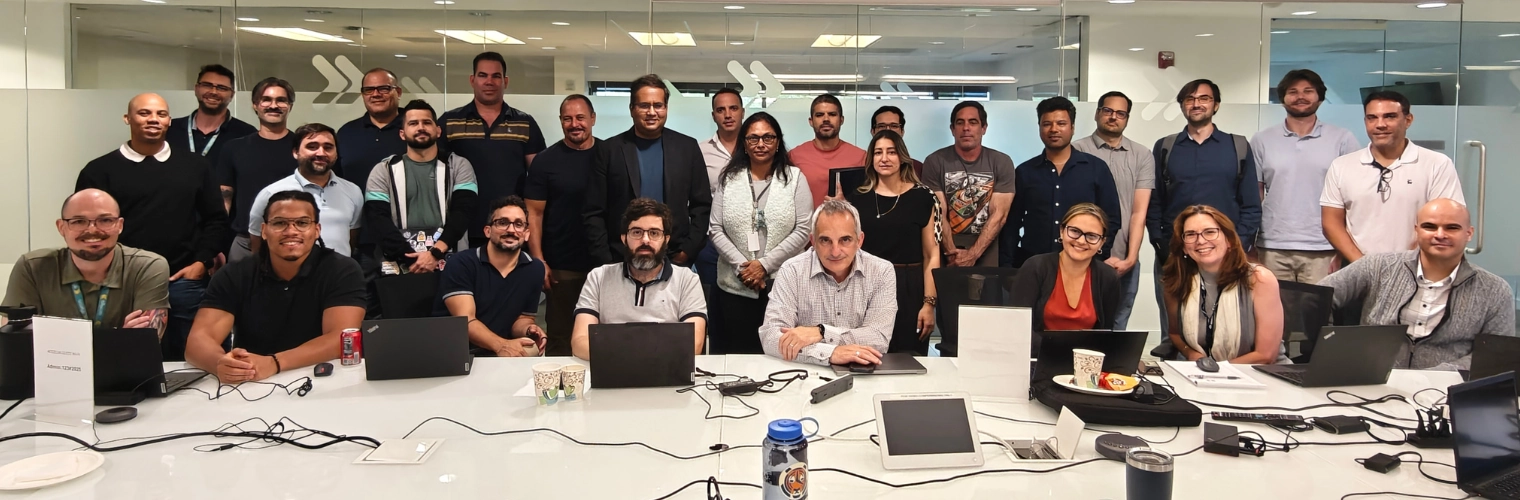


Airlines are under pressure to do more with the same infrastructure: more personalization in retailing, faster recovery in disruptions, tighter settlement cycles, and leaner operations.
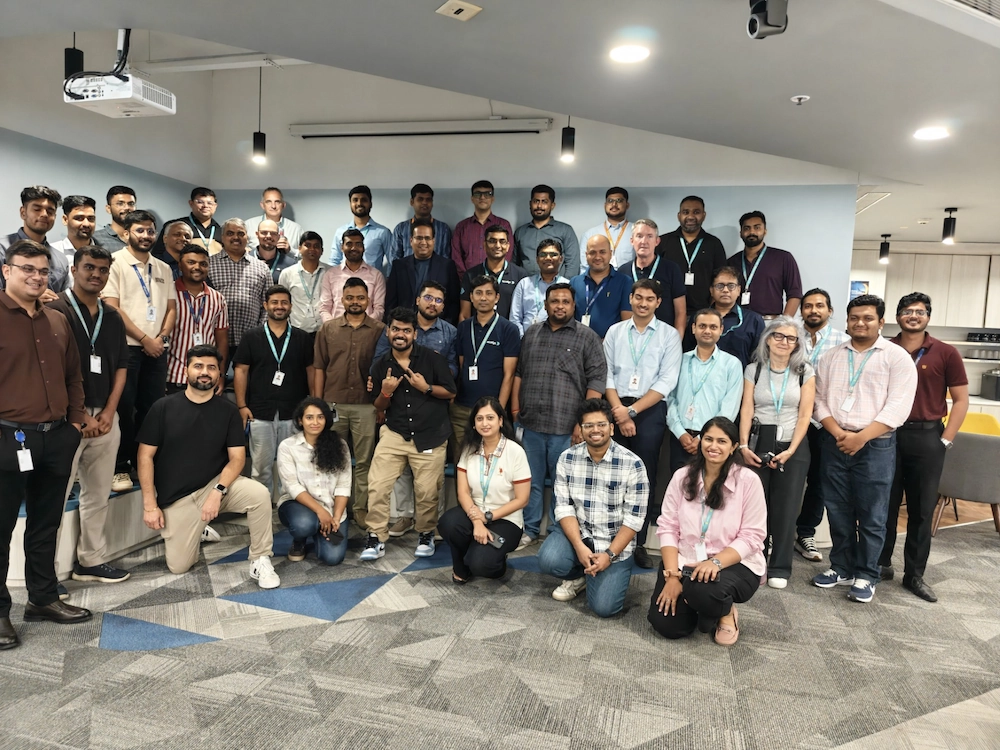
Over the past two months, Accelya brought together teams from across the business for two AI-focused workshops- first in Miami in May, followed by Pune in June. Together, 18 cross-functional teams set out to answer a simple but important question: What does it take to build an AI-native airline platform?
Not AI as an add-on capability. Not AI as a standalone chatbot. But AI embedded into how airline software is designed, delivered, and experienced.
The result was more than a series of prototypes. It became a practical exercise in accelerating innovation, developing new skills, and changing how we build products.
Why we created AI workshops?
The purpose of the AI workshops was never simply to experiment with new technology.
We had three clear goals.
Accelerate
First, we wanted to solve real airline problems faster. Rather than discussing potential use cases, teams focused on challenges that airlines face every day across retailing, servicing, settlement, operations, and cargo.
Develop
Second, we wanted to train our teams on agentic AI technologies and modern AI development practices. Participants worked across the entire lifecycle of building software: concept and problem definition, product and feature design, user experience and API design, AI-assisted code generation, robust testing and validation, cloud deployment and pipeline execution.
Importantly, this was not simulation. The code developed during these sessions is being incorporated into product delivery plans and will contribute to capabilities released in the coming months.
Connect
The third objective emerged as one of the most valuable outcomes. Bringing product managers, architects, engineers, domain experts, and leaders together in one location created a level of collaboration that is difficult to replicate virtually.
The energy across both workshops was remarkable. New relationships formed, barriers disappeared, and teams developed a stronger shared sense of mission around what we are building together.
A method inspired by VISTA
While the outcomes were exciting, the process was equally important. Many of the principles behind the AI workshops were inspired by methods developed through our collaboration with VISTA.
- Force Clarity Before Execution
Before each AI Week began, teams were required to define the product canvas, architecture, problem statement, mission, success criteria, and execution plan. This ensured every group entered the week with a clear destination. - Prepare the Environment
Execution only works when friction is removed. Infrastructure, AI agents, access rights, tooling, environments, and supporting resources were prepared before the teams arrived.The objective was to spend the week building, not troubleshooting setup issues. - Bring Everyone Into the Room
Perhaps the most important element was the decision to bring every contributor together physically.
What we built together
An AI-Native FLX ONE Platform
Across both AI workshops, teams advanced a shared vision for FLX ONE. Rather than treating AI as a bolt-on capability, the objective is to embed intelligence directly into the platform itself. For both passenger and cargo environments, FLX AIViator sits at the center of this vision as the intelligence layer connecting people, processes, workflows, and data.
As part of the workshops, teams experimented with AI-enabled assistants aligned to key roles across the software delivery lifecycle. Rather than replacing expertise, these assistants were designed to augment it, helping product, engineering, testing, security, and architecture teams move from ideas to execution with greater speed and consistency.
These experiments provided practical insights into how AI can support different stages of software delivery while remaining grounded in Accelya’s engineering practices, domain expertise, and governance standards.
The real learning was not about individual AI tools. It was about understanding how engineering teams can work differently when AI becomes embedded into everyday workflows. The question is no longer whether AI can accelerate delivery, but how organizations can combine human expertise and AI effectively to offer new levels of productivity and innovation.
Accelerating AI Code
Several teams focused on some of the industry’s most significant barriers to NDC adoption and Modern Airline Retailing. AI-assisted development approaches enabled teams to move from concept to working software in a fraction of traditional timelines.
Building an AI-Trained Workforce
Perhaps the most important outcome was the development of our people. Teams left with practical experience using agentic AI technologies across product development, architecture, engineering, testing, and deployment.
As individuals returned to their sprint teams, they carried back new skills, shared practices, stronger relationships, and greater confidence in AI-assisted delivery. These capabilities will continue to compound long after the workshops conclude.
What we learned
One insight emerged consistently across both AI workshops.
Even in an AI-enabled world, software engineering remains fundamentally a human exercise.
AI can accelerate design, coding, testing, documentation, and deployment. But the biggest constraint is often not technology. It is coordination. It is alignment. It is collective thinking.
The future of software development is not humans versus AI. It is humans and AI working together more effectively than ever before.
The road ahead
The AI workshops were never intended to be standalone events. They were designed to accelerate a broader transformation already underway across Accelya.
Through our collaboration with Vista Labs and AWS, we are investing in the capabilities, platforms, and skills needed to bring AI-native experiences to airlines faster and at greater scale.
The next phase focuses on taking these prototypes into production, expanding AI capabilities across FLX ONE, and continuing to build the skills that allow teams to innovate with speed and confidence.
What gives us confidence is not only what was built during the AI workshops. It is the combination of technology, talent, and collaboration that emerged from them.
Because ultimately, the future of aviation will not be shaped by AI alone. It will be shaped by teams who know how to use it together.
“Even with AI, software engineering remains largely a human exercise. Human coordination and collective thought remain the biggest constraints to unlocking delivery speed.”

 Press Releases

 Videos
 Whitepapers