Blogs
 6 mins read


IATA expects airlines to carry 5.1 billion passengers in 2026 and make just $4.50 in net profit per passenger. That’s about half the $9.10 they made in 2025 and puts the industry on a net margin of roughly 2%.*¹

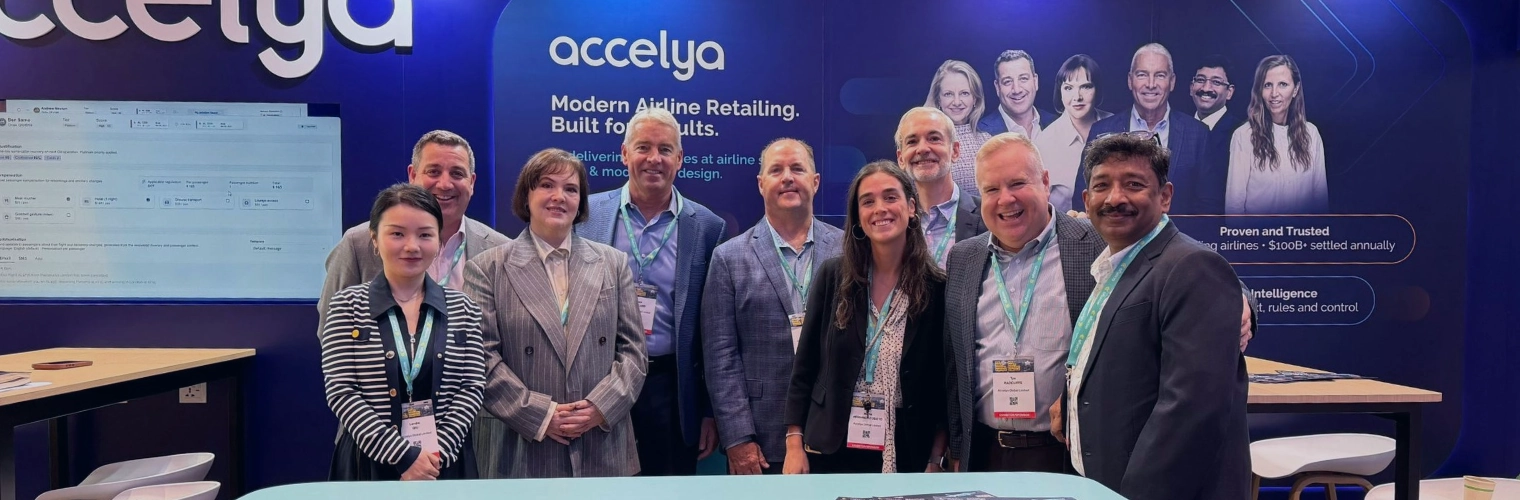
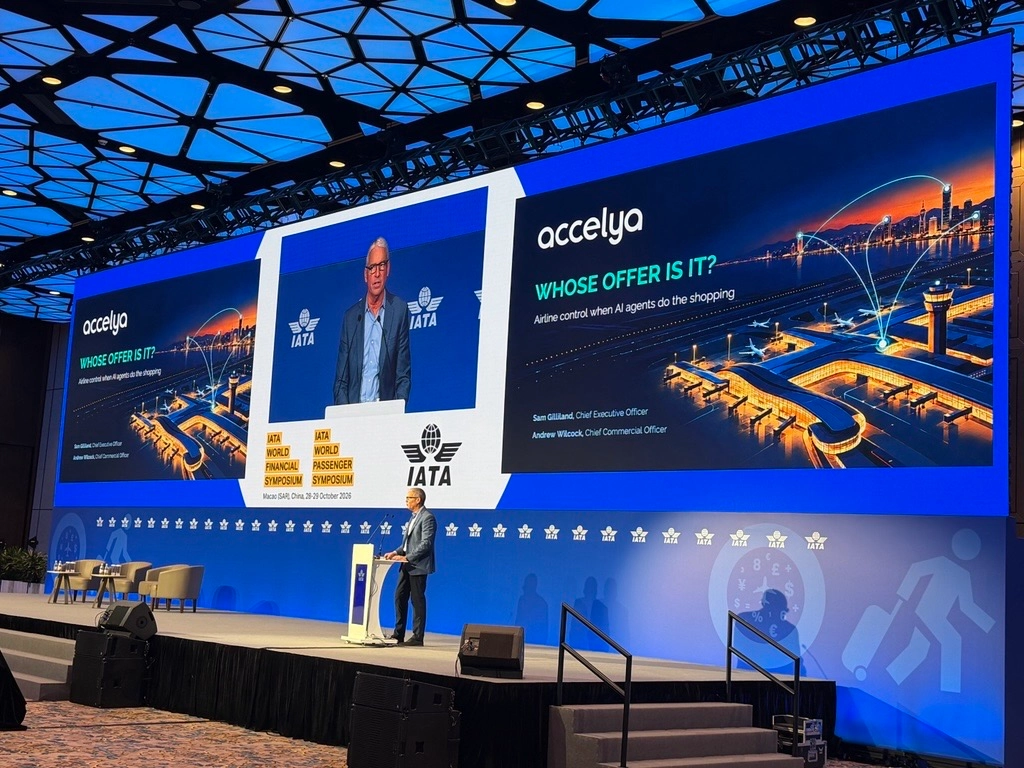
That was the backdrop to IATA’s World Passenger and World Financial Symposiums in Macau. The theme was ‘From Vision to Value’. What struck me was how practical the conversation has now become. After years of discussion and thousands of conference slides, the debate was less about whether modern retailing works and more about where and when it pays.
Make modernization pay as you go
At T2RL Engage, Richard Clarke (CEO, T2RL) described a shift he calls ‘escaped functionality’. Airlines are increasingly adding new capabilities around their existing technology, giving them a different way to think about investment. Rather than making the case for one big program, they can test focused capabilities against specific commercial outcomes. Does a better bundle lift ancillary sales? Does automated reconciliation recover more revenue? Can we bring down the cost of shopping per booking?
At a 2% margin, that’s a better starting point than a multi-year program with most of the payoff at the end. Each test gives the airline evidence about where to invest next. Scale what pays back, stop what doesn’t, and start capturing value as each capability goes live. In Macau, that logic came through most clearly in ancillaries, payments and the emerging economics of AI shopping.
Ancillaries show where NDC pays
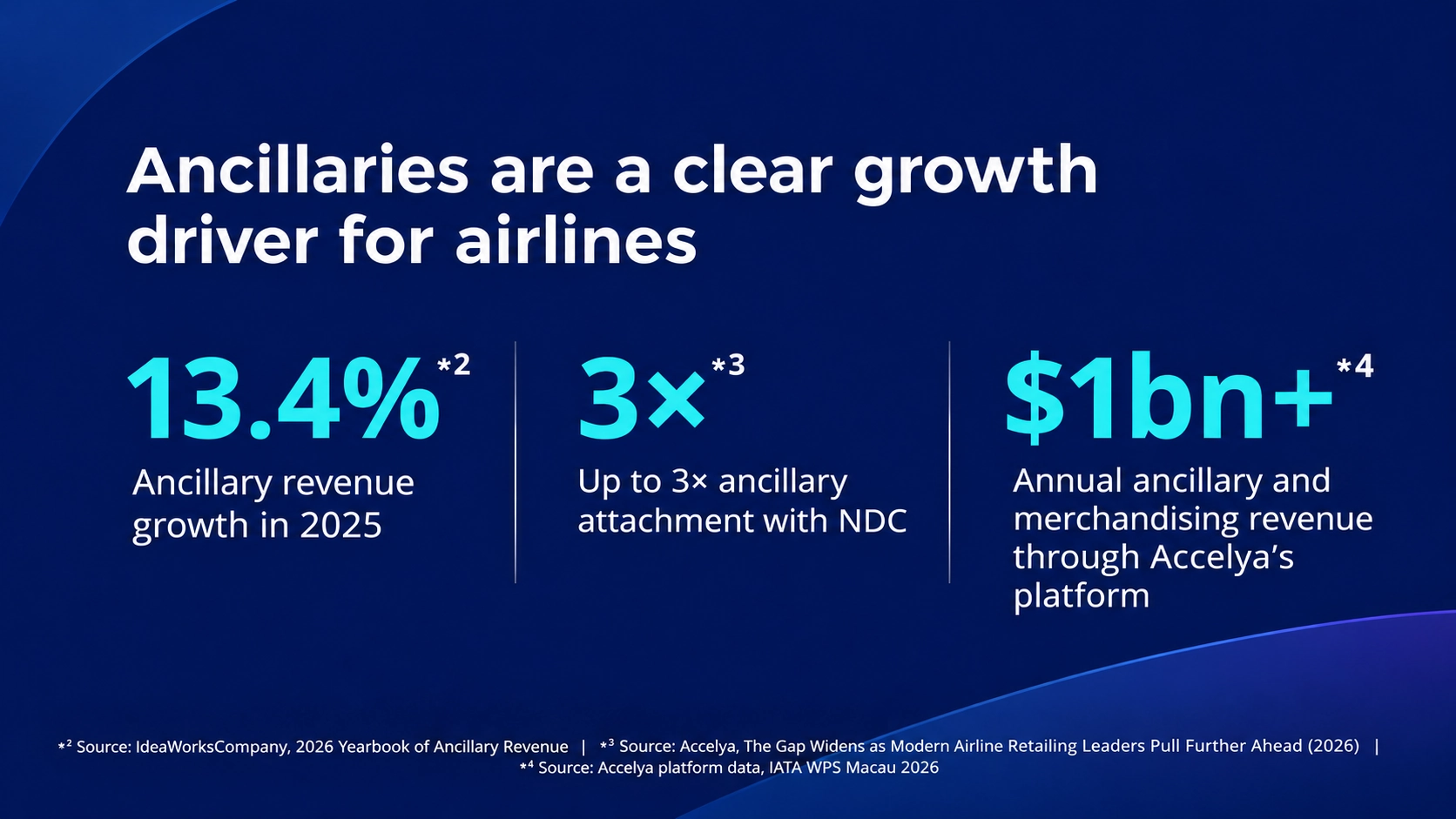
Across 58 airlines tracked by IdeaWorksCompany, ancillary revenue rose 13.4% in 2025*², nearly twice the growth in total revenue. NDC gives airlines more opportunities to sell those extras through indirect channels. In September, Lufthansa Group shared that half of its indirect bookings now flow through NDC, with ancillary attachment rates up to three times those on traditional EDIFACT channels.*³
We see the same opportunity at scale. Airlines now generate more than $1 billion a year in ancillary and merchandising revenue*⁴ through Accelya’s platform. The point is simple: airlines don’t have to wait for a full move to Offers and Orders to start capturing more value.
Payments are about more than fees
IATA estimates airlines spent $24.5 billion on payments to process $1.05 trillion in sales in 2025.*⁵ For a sense of scale, that’s more than the $23 billion in net profit IATA expects the entire industry to make in 2026.*¹
Payments are therefore another place where airlines can protect margin. Accelya’s Payment Reconciliation automates the matching from what was sold and billed through to what was settled and ultimately reached the bank. That helps airlines identify discrepancies, short settlements and other exceptions rather than allowing them to disappear in the complexity of millions of transactions.
That need for control extends to how airlines account for revenue. In Macau, we announced that Accelya’s Revenue Accounting solutions process more than $120 billion in airline revenue on an annualized basis.*⁶ As airlines sell more products through more channels, being able to account for what they’ve sold matters as much as being able to sell it in the first place.
Let agents shop and keep control of the offer
In IATA’s 2026 Global Passenger Survey, 49% of respondents said they had already used AI to plan travel.*⁷ As agents move from suggesting trips to comparing and booking them, airlines have another emerging channel to reach customers. Our view is that airlines should embrace it, but on their terms. AI agents can over time bring new demand but they can also generate far more shopping requests than a person ever would. The commercial challenge is to capture the opportunity without losing control of the offer or allowing the cost of shopping to grow faster than bookings.
At our IATA WPS breakfast workshop with Travel in Motion and representatives from several airlines, we discussed what that means in practice. Airlines should choose which agents and partners they work with, define how they connect and decide what they can access. Accelya’s role is to stand behind the airline, rather than between the airline and its customer.
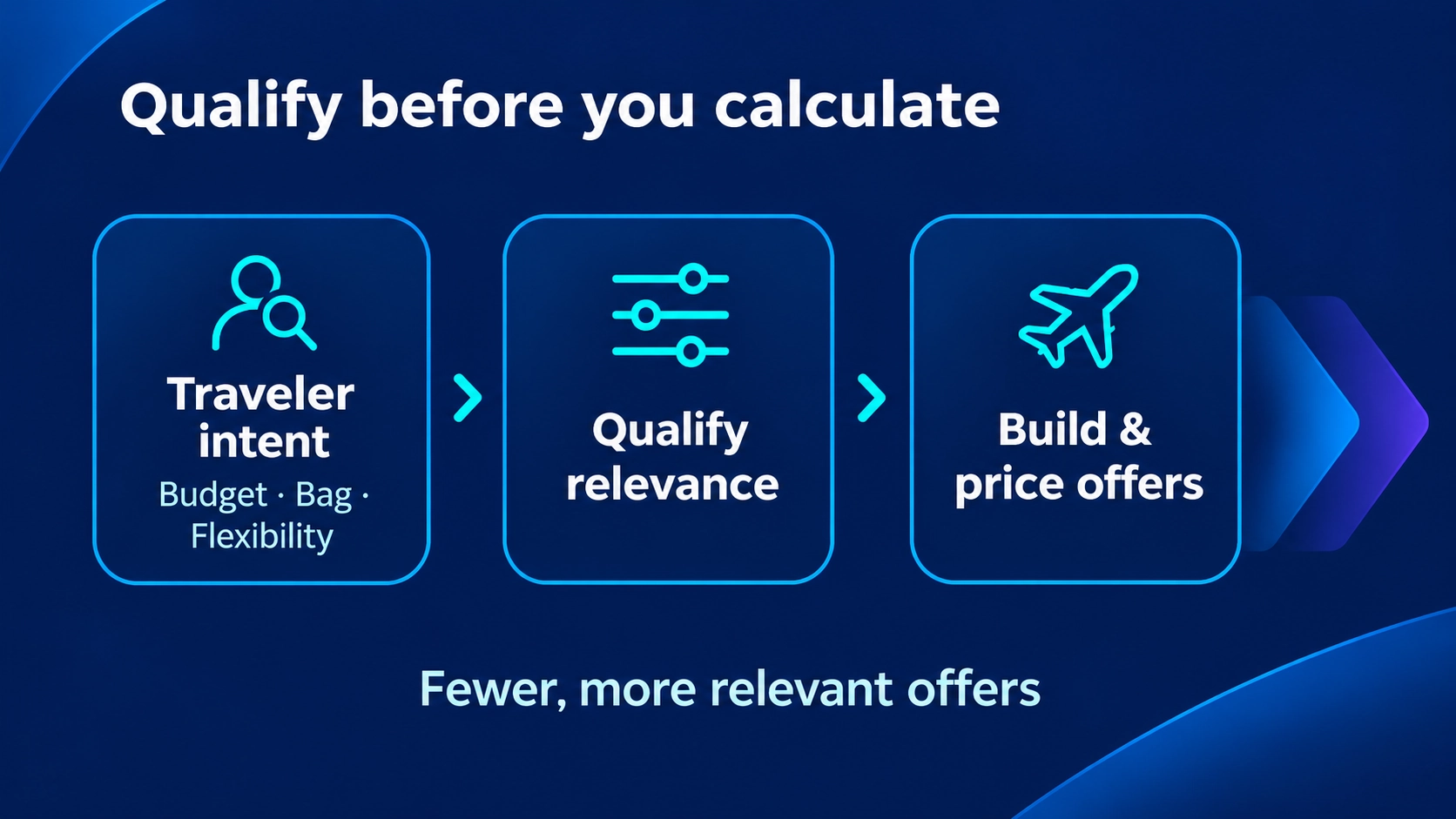
One principle we discussed was qualify before you calculate. Today, an airline may have to process many shopping requests to discover what a traveler actually wants. An AI agent can arrive with much richer context: the traveler needs a checked bag, wants flexibility and has a clear budget. Use that context to narrow what is relevant first, then build and price the offers that matter. The aim is fewer, more relevant offers around traveler intent, rather than simply answering more requests.
That same principle of airline control applies to how AI is used inside the airline. WestJet is testing AI-powered dynamic pricing through FLX ONE alongside its existing systems. The technology recommends pricing changes within the airline’s commercial parameters and guardrails, while WestJet remains in control of its pricing strategy. It’s another example of testing a focused capability, proving its value and deciding where to go next.
My takeaway from Macau is simple: the airlines that thrive will be those that don’t stand still. Whether it’s ancillaries, payments or agentic shopping, they will test new capabilities against a clear commercial hypothesis, prove the value and scale what works.
And incremental doesn’t mean unambitious. The best airlines have agency: they know where they are going and retain control of the technology and offers that give them the freedom to innovate. Move fast, unlock value as you go, but never lose sight of where you are going.
Sources
⁎¹ IATA, Airline Industry Profitability Outlook, June 2026.
⁎² IdeaWorksCompany, 2026 Yearbook of Ancillary Revenue.
⁎³ Accelya, Modern Airline Retailing: The Gap Widens.
⁎⁴ Accelya, platform data presented at IATA WPS Macau, October 2026.
⁎⁵ IATA, Payments Cost Airlines $24.5bn in 2025.
⁎⁶ Accelya, Revenue Accounting Processes More Than $120 Billion Annually.
⁎⁷ IATA, 2026 Global Passenger Survey.
Ready to turn Modern Airline Retailing into measurable value?
Discover how Accelya can help your airline unlock new revenue opportunities, improve efficiency and modernise at your own pace.


 Press Releases