

 Whitepapers
As airlines build richer offers across flights, ancillaries, partners, payments, and loyalty, the conversation is shifting from what airlines can sell to whether they can deliver what they promise.
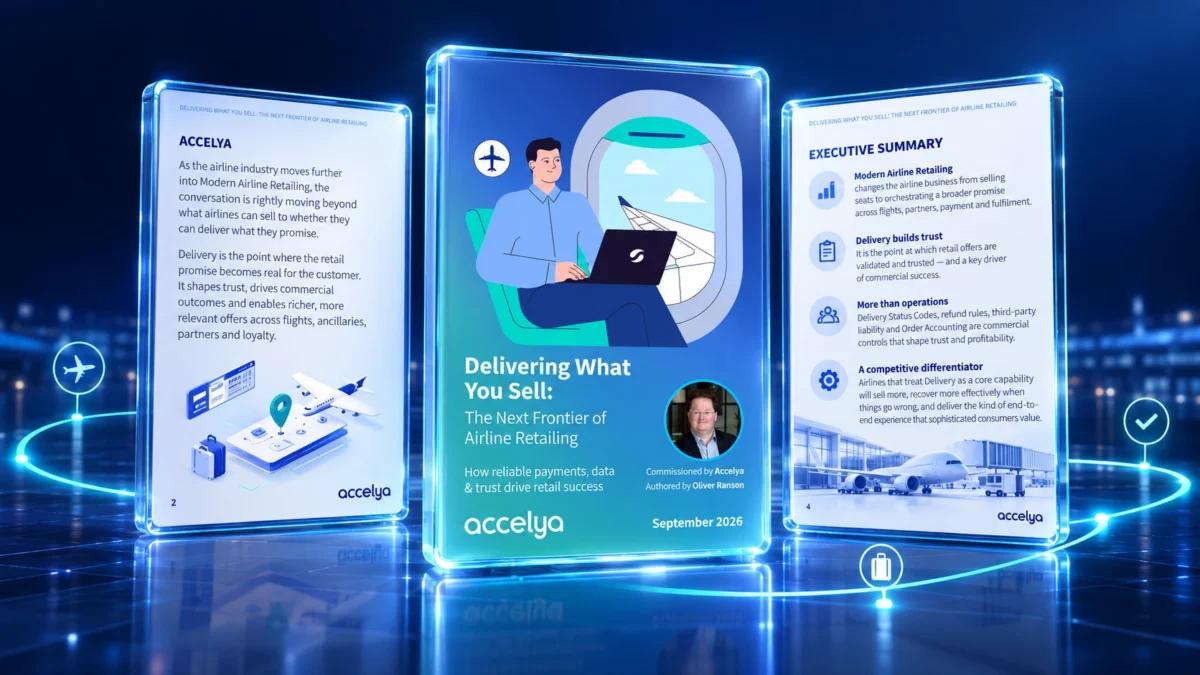
In Delivering What You Sell (Paper 4), Oliver Ranson argues that delivery can no longer be treated as a back-office process. It is the point where the retail promise becomes real for the customer, and where airlines prove whether their commercial systems, partner relationships, and payment flows are strong enough to support a broader retailing model.
The paper shows that Delivery Status Codes, refund rules, third-party liability, and Order Accounting are not just technical matters but commercial controls that shape trust and profitability. It works backward from the end result: what the customer receives, what the supplier is paid, and how the airline responds when either outcome doesn’t go according to plan.
What You’ll Discover:
- Why Delivery Status Codes are commercial controls, not just operational labels, shaping when revenue is recognized and suppliers are paid.
- How to handle the three ways delivery can fail: provider failure, suspension pending investigation, and disruption outside anyone’s control.
- Why orchestrating hotels, restaurants, and experiences beyond the flight transforms a single journey step into a lasting retail relationship.
- How flexible payment options, including installments, mixed cash-and-points, and Buy Now, Pay Later, make delivery confidence part of the offer itself, and why that raises the stakes for Order Accounting.
This is the fourth and final paper in a series exploring the next phase of airline retailing, including settlement, order integrity, and the discipline of delivering what you sell.
Download the paper to understand where airline revenue is actually secured.